Showing posts with label Nature. Show all posts

Sunday, December 9, 2012


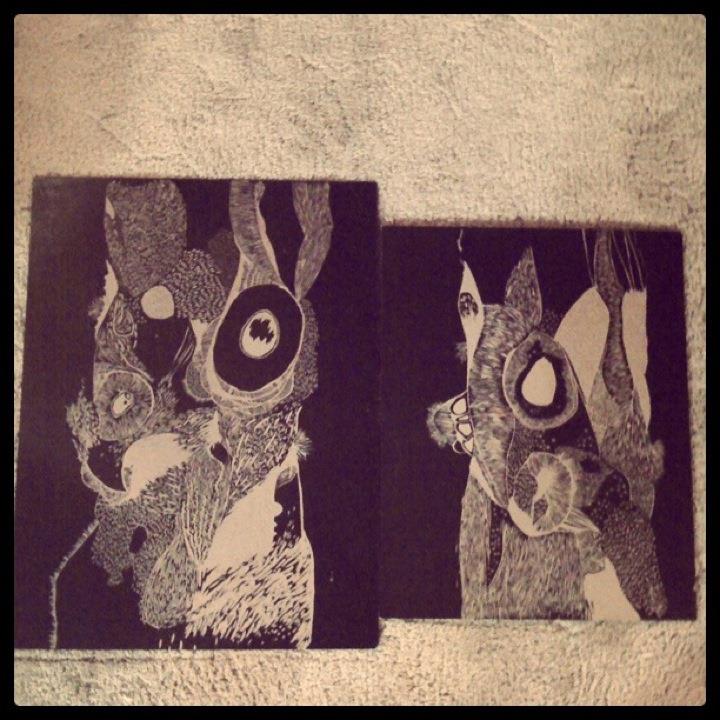
Last one about to get slayed to be ready for printing on MOONday. 
Speaking of the moon, I found this morning.

WAY awesome.....

MOONBOW

Source: I Fucking Love Science


What could be more picturesque than a rainbow?

How about a Moonbow? Or more correctly; a lunar rainbow!

As many of you will know, a rainbow forms as a result of the refraction of sunlight as it passes through water droplets in the sky. The refractive properties of the droplets cause sunlight to be split into a band of colours, more specifically the light spectrum. 

For a Moonbow, the principles behind its formation are quite the same. The only exception is the light source is no longer the Sun, but the Moon.

While most of us will have seen a rainbow at least once in our life time, a much fewer number will have had the pleasure to encounter the lunar equivalent. This is because, as the Moon is more variable than the sun, many conditions need to be just right.

1- Moonbows are best seen when the Moon is conspicuous in the sky, so the period around the full moon, and more particularly before and after the gibbous phase is particularly favourable.

2- Of course, the brightest Moon thinkable will not cause a moonbow on its own accord. Moisture in the air also a crucial component. The best nights to see a moonbow is when there is rain coupled with intermittent clear skies.

3- The last main consideration is the position of the Moon in the night sky. Acredited to the atmospheric optical parameters of water droplets; a low Moon altitude is desired. If the Moon is greater than 42 degrees above the horizon, no bow will form.

These three things are the basic necessities for the formation of a lunar rainbow. While they may sound like reasonable considerations individually, it is quite a different situation when you need all three of these to work together at the same time. As a result, this phenomenon is really quite rare.

The best places to witness this spectacle are said to be the Scottish Highlands and The Hawaiian Islands as well as Ireland and the United Kingdom.

So, if you ever think it is a Goldilocks night, in which all the conditions are right- get outside and see if you can catch a glimpse of this amazing phenomenon.

-Jean

Photo courtesy of Rob Ratkowski of Hawaii.


2 more complete. 1 more to go until the series is complete and ready to print.

Two woodcuts  - 18x24 and 11x16 on masonite 

Lots of music and tea today. 


Exploring the textures of nature that are embodied by the skin of the ephemeral. (trees). 


Monday, September 3, 2012


Loomin' on the porch with bees and humming birds.  

Sunday, September 2, 2012


Texture.
Sand at Longpoint Beach, ON.
Longpoint Beach with my lovely, awesome friends!


Sunflower

Before:

After:


Bees.


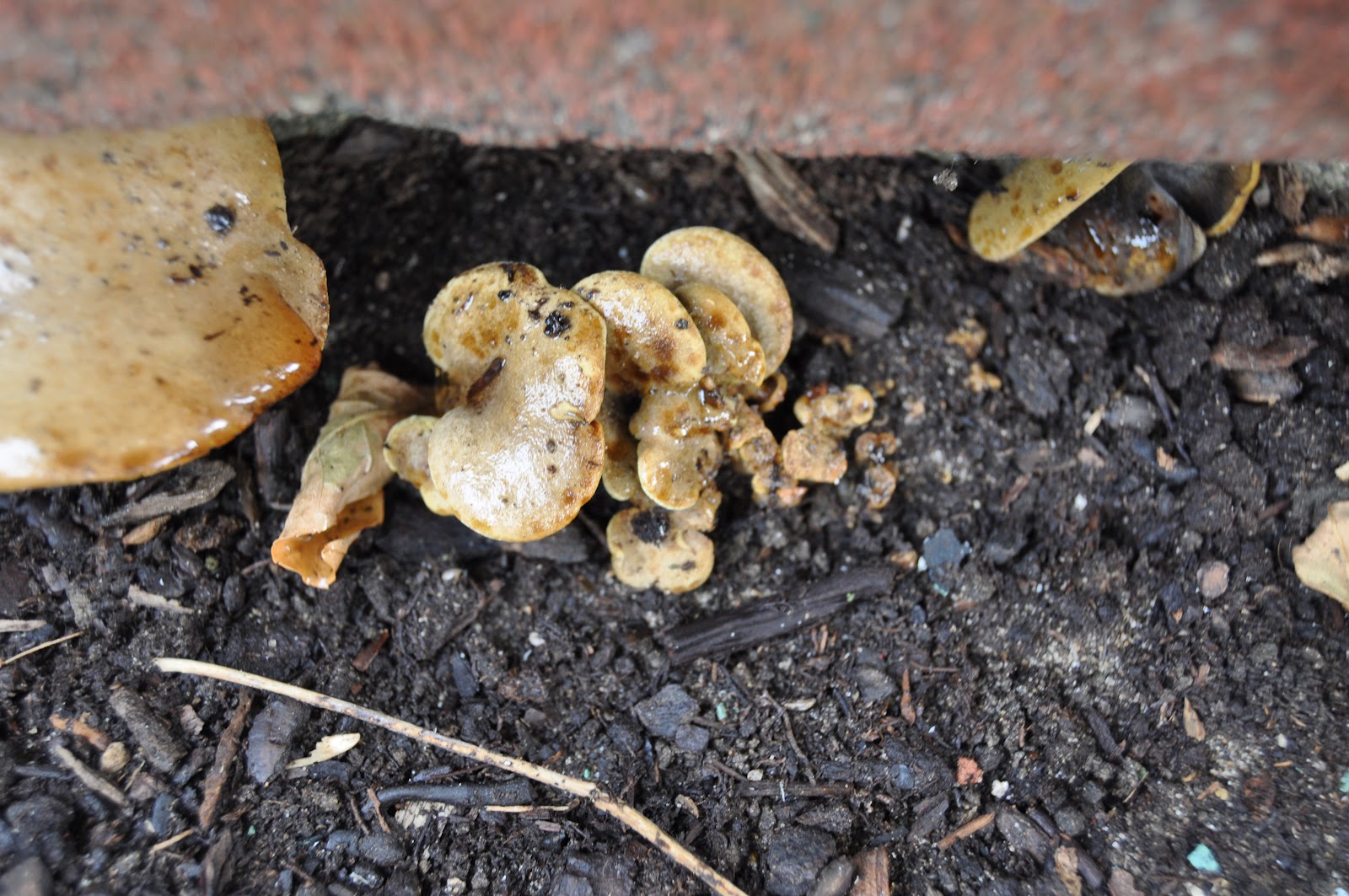
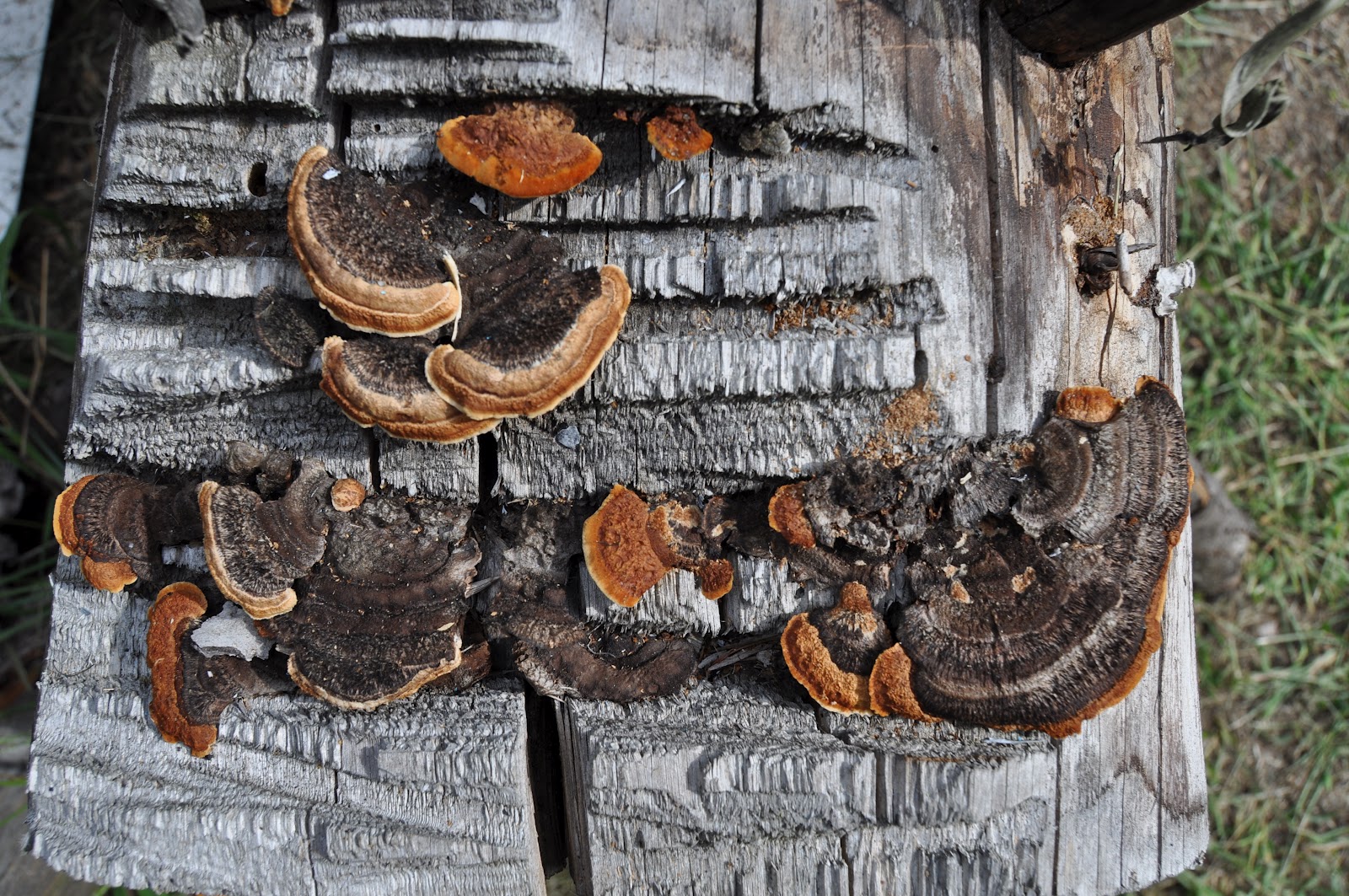
FUNGUS

Potential dye candidates. 

A birds nest I found on one of my walks through the forest. 

Such craftsmanship. 

Thursday, July 26, 2012


More textures!


Pic 1: A close look at a section of my installation
Pic 2: Flowers in my garden


 New neighbors. 


This is (a rather large) family of Black and White Hornets that are currently inhabiting the south-east side of one of our sheds. 


I am absolutely in love with natural architecture lately, mostly nests of all sorts. A dwelling. A foundation. A home. 

This has inspired a new body of work, which I will post process shots of shortly.


Sunday, July 22, 2012


 Just a little floral arrangement. 


They smell as good at they look.


Black Eyed Susies and Red Gladiolas. 

Harvesting


Veggies my mom and I picked today after blueberry farming. I must say, our garden is growing lovely! Thank you nature for being awesome and giving us delicious treats!

 Yum. I know what I am cooking for dinner tonight...


Cucumbers, Purple Peppers, Green and Yellow Beans, Tomatoes, and Peas. 


Food porn.


If you know me, I love macro and micro. 


I think I will incorporate this texture into a sculpture I am currently working on for an installation in Toronto, On as part of Blackoutfest.


Will see how it goes...

Friday, July 6, 2012

Blueberry Love

Instead of running in the rat race of Toronto and being a cubicle desk jockey, I opted for picking and grading Blueberries. 

I love it. 
Everyday I surrounded by nature; bugs, plants, and delicious blueberries.


Here are some photos I took of the grading machine, which, well, grades the blueberries before they are shipped out to our customers


Bluejay Blueberries


I love Bugs

These are some photos I took in my backyard at night while having a cup of tea looking up at the stars.

I sense these images will become pen and ink drawings. 


Bugs are rad. 


This is a Wood Nymph Moth (Eudryas grata)


Kindred spirits... I think yes.


Moths are butterflies of the Night.


 June Bug (Phyllophaga)

After spending the last two hours trying to determine this specie of moth, the search was unsuccessful. 

Perhaps it is a new specie. 
(doubt it) 

Time to invest in a moth handbook.

Thursday, December 8, 2011

Sea Urchins

Probably one of my favorite things in the world... Sea Urchin skeletal remains. <3

I Die with Smiles

My heart melts.

I Want

I am not sure what exotic flower this is, all I do know is that I want to grow some. 

Beautiful.

Sunday, December 4, 2011

My Heart Melts


Zombie Ants have Fungus

New research has revealed how infection by a parasitic fungus dramatically changes the behavior of tropical carpenter ants (species Camponotus leonardi), causing them to become zombie-like and to die at a spot that has optimal reproduction conditions for the fungus. The multinational research team studied ants living high up in the rainforest canopy in Thailand. A paper describing the research was published in the BioMed Central open-access journal BMC Ecology on May 9. To see photos related to this research, visit http://live.psu.edu/flickrset/72157626690115010 online.
"The behavior of these infected zombie ants essentially causes their bodies to become an extension of the fungus's own phenotype, as non-infected ants never behave in this way," said David P. Hughes, the first author of the research paper and an assistant professor of entomology and biology at Penn State.
A dead carpenter ant attached to leaf in the understory of a Thai forest. Before killing the ant, the fungus growing from ant's head changed the ant's behavior, causing it to bite into the leaf vein. Click on the image above for high-resolution photos.
Using transmission-electron and light microscopes, the researchers were able to look inside the ant in order to determine the effect of the fungus on the ant. They found that the growing fungus fills the ant's body and head, causing muscles to atrophy and forcing muscle fibres to spread apart. The fungus also affects the ant's central nervous system. The scientists observed that, while normal worker ants rarely left the trail, zombie ants walked in a random manner, unable to find their way home. The ants also suffered convulsions, which caused them to fall to the ground. Once on the ground, the ants were unable to find their way back to the canopy and remained at the lower, leafy understory area which, at about 9 or 10 inches (25 cm) above the soil, was cooler and moister than the canopy, provided ideal conditions for the fungus to thrive.
The scientists found that at solar noon, when the Sun is at its strongest, the fungus synchronised ant behavior, forcing infected ants to bite the main vein on the underside of a leaf. The multiplying fungal cells in the ant's head cause fibres within the muscles that open and close the ant's mandibles to become detached, causing "lock jaw," which makes an infected ant unable to release the leaf, even after death. A few days later, the fungus grows through the ant's head a fruiting body, a stroma, which releases spores to be picked up by another wandering ant.

"The fungus attacks the ants on two fronts: first by using the ant as a walking food source, and second by damaging muscle and the ant's central nervous system," Hughes said. "The result for the ant is zombie walking and the death bite, which place the ant in the cool, damp understory. Together these events provide the perfect environment for fungal growth and reproduction."

Hughes said his continuing research at Penn State is designed to learn how the fungus might be used to control pest insects in homes and farms.